
Adapting the home for seniors is not simply a technical renovation, but a profound act of love designed to prolong the autonomy of those you love most.
By transforming your home into a safe space, you not only prevent risks, but also ensure that you or your loved ones can age with the comfort, independence and peace of mind that only home itself can provide.
Why is home adaptation vital for older people?
As you age, it is natural to lose some agility, which can turn everyday tasks into challenges that put your mobility to the test. Homes with architectural barriers, such as complex staircases or narrow hallways, not only limit your freedom of movement, but also increase the risk of domestic accidents.
Improving accessibility at home is essential because it:
- Reduces the risk of falls, the main cause of emergency hospital admissions among older adults.
- Protects not only your physical health, but also your confidence and emotional well-being.
- Prevents situations that may lead to the need to move into a care home.
In addition, adapting your home allows you to maintain your autonomy in daily life, which brings important benefits:
- Reinforces your self-esteem by helping you feel independent.
- Allows you to continue living in the environment you know and value.
- Brings peace of mind both to you and to those close to you.
Ultimately, adapting the home is not just a practical matter, but a preventive decision that connects your mobility needs with solutions that improve your quality of life.
What home adaptation measures for seniors should be prioritised?
To get off to a good start, it is essential to remove any physical obstacle that makes movement around the home difficult. Keeping circulation areas clear is one of the simplest and most effective measures you can apply from the very beginning.
- Keep hallways and stairs free of objects.
- Avoid items that block or reduce passage space.
- Make it easier to move comfortably and safely between rooms.
Lighting also plays a key role in your safety. Poor visibility increases the risk of trips and falls.
- Install brighter lights in critical areas.
- Ensure uniform lighting throughout the home.
- Place motion sensors in hallways and bathrooms so you do not have to rely on switches.
As for flooring, it is important to choose safe surfaces that reduce the risk of slipping:
- Prioritise even surfaces without level differences.
- Avoid overly polished or slippery materials.
- Use slip-resistant flooring with texture, grain or porosity.
- Pay special attention to safety in entrances and wet areas.
With these measures, you can create a safer, more accessible environment adapted to your daily needs.
How to improve seniors’ adaptation to their environment?
There are different ways to improve home adaptation for an older person without carrying out major building work. Small changes can make a big difference in everyday functionality and comfort.
For example, you can improve the use of doors and access points:
- Replace traditional doorknobs with lever handles.
- They make opening easier, especially if you have less hand strength or use a wheelchair.
It is also important to adapt the height of everyday elements to make them more accessible:
- Place switches and sockets at a comfortable height, even when seated.
- Avoid having to bend down or stretch too much.
Furniture layout directly affects your mobility inside the home:
- Keep spaces clear and with an open layout.
- Avoid sharp corners that could cause knocks.
Ensure there is enough space to move around with a walker or wheelchair.
In the bedroom, pay special attention to comfort and accessibility:
- Adjust the bed height to make it easier to lie down and get up.
- Place switches or light controls within reach from the bed.
These small adaptations create a more functional and safer environment, allowing you to maintain your independence and carry out daily activities without constantly depending on other people.
How can you achieve true accessibility at home in critical areas?
The bathroom is one of the areas with the highest risk of domestic accidents, so adapting it should be a priority.
- Install a level-access shower to avoid steps.
- Add seats inside the shower for greater comfort and safety.
- Use ergonomic taps that are easy to operate.
In the kitchen, the key is to improve functionality and avoid unnecessary effort:
- Place worktops and appliances at an accessible height.
- Avoid having to bend down or stretch too much.
- Make sure cabinets are within reach without using stools.
- Eliminate the use of unstable items that could cause falls.
Access to the home is also fundamental to ensuring safety and comfort from the very beginning:
- Provide a direct, spacious, and unobstructed entrance.
- Replace steps with gentle ramps whenever possible.
- Avoid uneven surfaces that hinder access.
With these adaptations, you significantly improve safety and make your home more accessible and comfortable for everyday use.
When architectural barriers affect multiple floors or the overall mobility within a home, solutions such as SHE-Elevator’s electric home lifts enable comprehensive accessibility improvements.
What solutions improve accessibility in care and support homes?
When stairs become a danger, improving accessibility in multi-storey homes becomes a vital necessity so you do not feel trapped. A home lift is the definitive solution for maintaining total independence.
| Aspect | Home lift |
|---|---|
| Longevity vs. temporary solution | Unlike a stairlift, a lift offerslong-term independence, even if your mobility changes over time. |
| Daily functionality | It helps you carry heavy objects, such as thelaundry basket or groceries, effortlessly. |
| Integrated design | Modern SHE-Elevator models move away from the “medical” look toblend perfectly with your home’s décor. |
You should choose between a lift and a stairlift according to your current and future needs. While a stairlift is a quick solution, a home lift offers greater longevity and flexibility if your mobility decreases further.
How do home adaptations for disabled people benefit daily life?
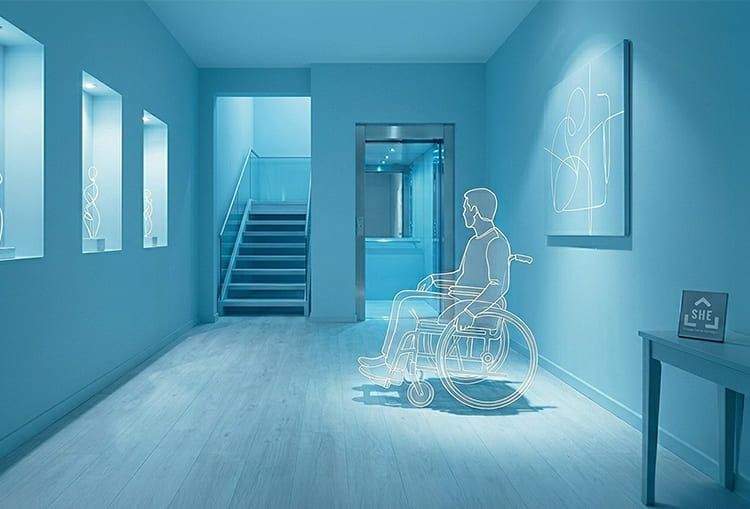
Home adaptations for disabled people allow the environment to adjust to the person and not the other way around. This is essential in adapting the home for dependent people, where every centimetre counts for manoeuvring safely.
| Adapted element | Impact on autonomy |
|---|---|
| Wide doors | Allowfree passagefor wheelchairs and walkers. |
| Gentle ramps | Eliminate the need toovercome dangerous steps. |
| Emergency systems | Make it possible toask for help quicklywhen needed. |
Investing in these improvements not only removes physical barriers, but also reduces the burden on caregivers by encouraging self-sufficiency. A well-adapted home enables active ageing, where you remain the main figure in your social and domestic life.
How does accessibility increase long-term property value?
Making your home accessible not only improves your quality of life, but also increases its functional and economic value. Adapted homes are becoming increasingly attractive in the property market.
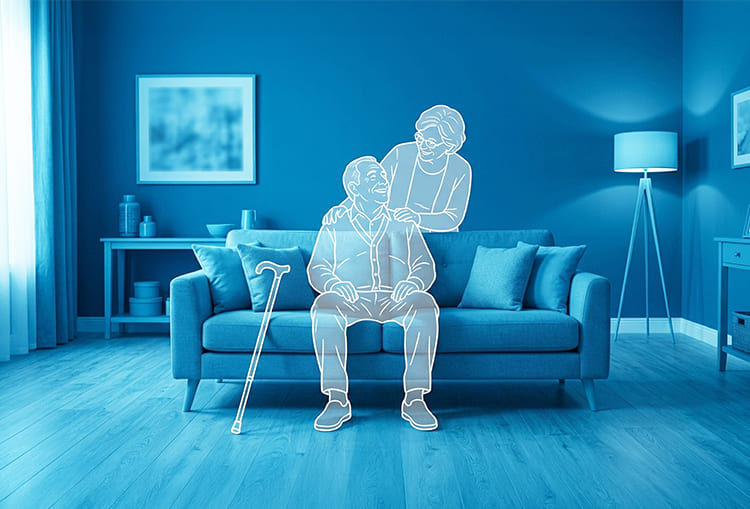
When planning a renovation, opting for home lifts for people with disabilities is a sound long-term investment, enhancing accessibility, comfort, and autonomy.
- Increases the value of the home.
- Improves its appeal to future buyers.
- Makes it suitable for every stage of life, not just old age.
Installing a lift is one of the most notable improvements in this regard:
- Facilitates mobility inside the home.
- Provides comfort and safety in daily life.
- Significantly increases the property’s value.
If you live in a detached or semi-detached house, there are specific solutions such as lifts for townhouses, designed to integrate easily into this type of building.
In multi-storey homes, the installation of duplex home lifts is becoming an increasingly common solution
- Improves accessibility between levels.
- Increases daily comfort.
- Significantly enhances the property’s value.
In addition, current solutions are designed to blend in with your home’s style:
- They adapt to the existing décor.
- They offer a modern and discreet design.
- They move away from the appearance of traditional medical equipment.
Taken together, these improvements not only respond to current needs, but also represent a strategic investment for the future.
Frequently asked questions
When is a home considered accessible?
A home is considered accessible when it is adapted to meet the needs of older people, offering maximum safety and comfort. It includes elements such as ramps, handrails and bathrooms designed to minimise the risk of accidents.
What types of accessibility exist in a home?
There are mainly three types: physical accessibility (barrier-free movement), sensory accessibility (improvements in lighting and alerts) and cognitive accessibility (ease of orientation and use of devices). Together, they guarantee a safe environment for older adults.
How can accidents be prevented immediately?
You can start by keeping hallways free of obstacles, improving lighting with motion sensors and using slip-resistant materials. It is also vital to regularly review the safety of systems such as stairlifts or lifts if you already have them.
Why choose a home lift instead of a stairlift?
A home lift is usually more flexible in terms of location and offers greater longevity if your mobility changes over time. In addition, it allows you to transport heavy loads such as groceries or a vacuum cleaner, making your daily tasks easier overall.
Choose autonomy and safety for life
Adapting the home for older people is the safest way to maintain autonomy and well-being. Every adjustment you make today is an investment in independence and peace of mind for the future, in the place where you truly feel at home.
At SHE-Elevator, we manufacture technology designed to protect your mobility and your peace of mind. If you want to take the definitive step towards a barrier-free home, discover how to improve your home’s accessibility with a lift and transform your daily life.
Do not let stairs limit your life, and invest in the safety, comfort and freedom that only an accessible home can offer.
