
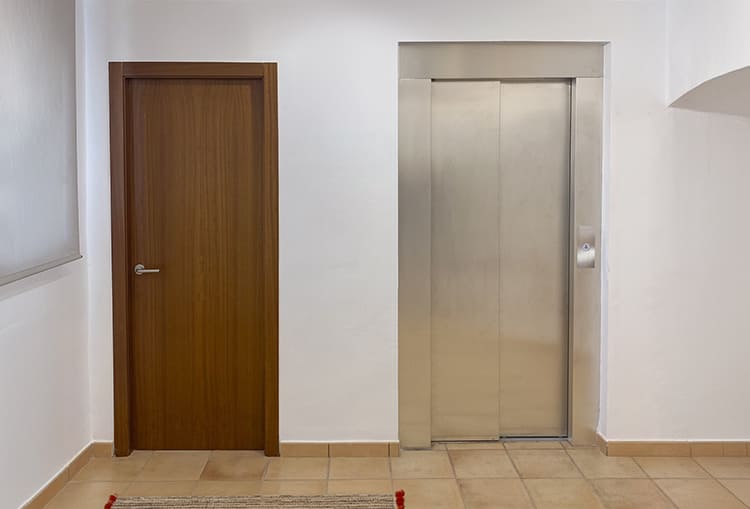
When an older person begins to find stairs difficult, the issue affects far more than their mobility. It can also change the way the whole family uses and enjoys their home.
That was the situation faced by the Pérez-Herrero family. María, the grandmother of the family, had reduced mobility and lived with her daughter, son-in-law and grandson in a three-storey house. Moving between floors had become increasingly difficult, limiting her independence and meaning that she often needed help simply to get around her own home.
The family therefore began looking at ways to adapt the property so that María could regain greater independence while continuing to enjoy the family home.
When stairs start to restrict everyday life at home

The Pérez-Herrero family lived in a three-storey property. Important areas used in everyday family life, including the kitchen-dining room and bedrooms, were located on the upper floors.
For María, moving from one floor to another was no longer straightforward. She relied on other family members for assistance, reducing her independence and affecting everyone’s daily routine.
The issue was therefore not simply about overcoming a flight of stairs. The family wanted to:
- Make it easier for María to access every floor.
- Reduce her dependence on other people.
- Allow her to continue using the main areas of the home.
- Prevent the stairs from limiting her independence.
For children and relatives facing a similar situation, this raises an important question: how can a multi-storey home be adapted when stairs are no longer a practical option for someone with reduced mobility?
The family looked for a solution for the whole home
Ana and Julio began considering different ways to improve accessibility throughout the house.
Their aim was to find a solution that met María’s needs while also fitting the characteristics of the property and the family’s everyday life.
They considered several alternatives.
What options did they consider?
The family mainly looked at three possibilities: a conventional passenger lift, a stairlift and a home lift.
Each option came with different requirements.
Conventional passenger lift
The family initially considered installing a conventional passenger lift.
However, based on their experience, this option did not suit the property. The cost was high and the house did not provide the space required for the necessary pit and headroom.
They also considered the impact it could have on the home’s electrical installation.
Stairlift
Another possibility was a stairlift.
The family eventually ruled this out because they did not feel it would provide María with the level of independence they were looking for, and they were also concerned about the potential risk of falling while using it.
They wanted a solution that would allow María to move between floors without continually relying on someone else.
Home lift
After considering the different alternatives, the family chose solutions adapted to the characteristics of their property and the needs they had identified for María.
The chosen solution was electric and single-phase, which suited the requirements the family had established for the project.
Advice throughout the process was also important to Ana and Julio. They received information about the solutions available for their property, as well as potential grants and financing options they could consider before making their decision.
The real change went beyond installing a lift
The real transformation became apparent after the installation.
María was able to move between the different floors of the house with greater independence and reach areas of her home without constantly relying on her family for help.
For Ana, this made a significant difference to her mother’s daily life:
- María regained some of the independence she had lost as stairs became more difficult.
- The family no longer needed to assist her so frequently when moving around the house.
- Different floors became accessible to her again.
- Accessibility became part of the way the whole family could continue to enjoy their home.
One of the most important aspects of the Pérez-Herrero family’s experience is that adapting the home allowed María to regain some of the independence she had lost as moving between floors became more difficult.
A home designed with the future in mind
For the family, the decision was not only about solving an immediate need. They also wanted to prepare their home for the future.
Julio explains:
“Investing in a home lift is a long-term solution. We all know that we are getting older, and we see the lift as an investment that will allow us to grow older in our own home with greater peace of mind.”
This perspective can be particularly relevant when adult children are involved in adapting their parents’ home.
A property may have worked perfectly for decades but become less suitable as mobility needs change. Improving accessibility does not necessarily mean having to move house.
Adapting the home can help to:
- Keep the property practical for longer.
- Make moving between floors easier.
- Reduce dependence on relatives.
- Prepare the home for future needs.
- Allow people to remain in familiar surroundings.
Accessibility can also become part of the design
For the Pérez-Herrero family, there was another requirement: the solution also needed to work visually within their home.
Customising the dimensions and finishes allowed the lift to become part of the property rather than being seen purely as a functional addition.
Accessibility and good design do not have to be competing priorities.
The family’s experience shows how a residential lift can be integrated into a home and adapted to the property itself rather than treated as an isolated piece of equipment.
What changed for the Pérez-Herrero family?

Their experience can be summarised in four main changes:
- Greater independence for María: she could move between floors more independently.
- Less reliance on the family: she no longer needed constant help to reach different areas of the house.
- Better use of the home: all floors became accessible to María again.
- A decision made with the future in mind: the family viewed the adaptation as a way of preparing the property for changing needs over time.
The most important result was not the lift itself.
It was giving María greater freedom to use her own home again.
Every home requires a different accessibility solution
The Pérez-Herrero family’s experience will not be identical to that of every household.
Accessibility requirements vary depending on:
- The person using the lift.
- Their mobility requirements.
- The layout of the property.
- The number of floors.
- The space available.
- Frequency of use.
- The purpose of the installation.
You can also discover other real SHE-Elevator projects, including Carmen’s story and how accessibility changed her home, the experience of using a single-phase electric lift during injury recovery and Asunción’s story of installing a lift in a holiday home.
Every project begins with different needs and different property constraints. Before choosing a lift, it is therefore important to consider both the mobility needs of the user and the space available in the home.
An accessible solution should be designed around the individual
The SHE-Elevator range includes solutions designed for different types of properties and accessibility requirements.
The SHE-004 is designed for people with reduced mobility in private homes. It features a spacious cabin, automatic doors, a rated capacity of 400 kg and a clear door opening of 800/900 mm. It can make moving between floors easier for wheelchair users or anyone who requires additional space.
Before choosing a model, it is important to assess:
- The space available for the installation.
- The layout and number of floors in the property.
- The specific needs of the person who will use the lift.
- The type of access and movement the installation needs to facilitate.
This does not mean that there is one model that suits every home. The right choice depends on both the available space and the specific requirements of each project.
Accessibility can change the way we experience our homes
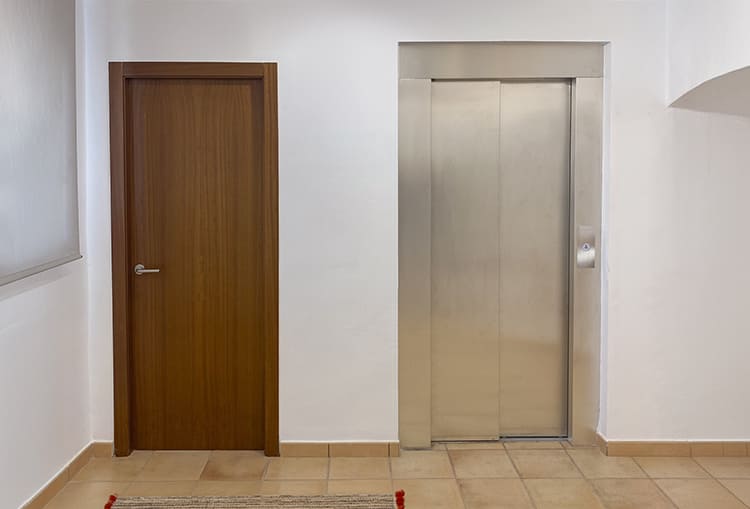
The Pérez-Herrero family’s story raises a question that goes beyond mobility:
How can we continue living in our own home when our family’s needs change?
Installing a lifting solution brought practical benefits:
- For María: greater independence when moving between floors.
- For Ana and Julio: greater peace of mind and less need for María to rely on the family.
- For everyone: a home that is better prepared to continue meeting the family’s needs for years to come.
In this case, accessibility was not simply a technical matter. It was a family decision.
Frequently asked questions about adapting a home for accessibility
Why did the Pérez family decide to adapt their home?
The family decided to adapt the property because María had reduced mobility and needed help moving between its three floors. They wanted a solution that would give her greater independence at home.
What options did the family consider?
They considered a conventional passenger lift, a stairlift and, ultimately, a home lift. Their final decision was based on the characteristics of the property and María’s mobility requirements.
What changed after the lift was installed?
According to the family’s experience, María was able to move between floors more independently and rely less on relatives for help getting around the house.
Can a lift help future-proof a home?
The Pérez-Herrero family’s experience shows how a lifting solution can address current mobility requirements while also preparing the property for changing needs in the future.
An accessible home can continue to support your family
The Pérez-Herrero family’s story shows that adapting a property is about much more than simply installing a lift. It is about helping the people who live there continue to enjoy their home with greater independence as their needs change.
If you are considering improving accessibility in a multi-storey home for a relative, the first step is to assess their needs alongside the characteristics of the property. From there, you can explore the options available, including home lifts for private houses, and identify the solution that best suits your situation.
