

The energy consumption of a home lift depends on factors such as the drive technology, frequency of use, load, lighting and standby consumption. To reduce your electricity bill, you therefore need to consider the lift as a complete system rather than focusing solely on the motor.
Energy efficiency starts with choosing a solution suited to the intended use and continues with the correct configuration of lighting, standby and operating functions.
What makes a home lift consume more electricity?
Not all lifts use the same amount of energy. Consumption depends both on the characteristics of the equipment and on how it is used.
The main factors include:
- Drive technology, which determines how the lift car moves.
- Frequency of use, as every journey involves an operating cycle.
- Load, which affects the amount of work required from the system.
- Car lighting, particularly if it remains on during periods of inactivity.
- Standby consumption, associated with systems that remain active while the lift is not moving.
- The condition of the lift, which should be maintained in its intended operating condition.
There is therefore no single consumption figure that applies to every home lift.
If you would like to understand in more detail which factors determine consumption and how they affect electricity costs, read our guide to home lift energy consumption.
How can you reduce the electricity consumption of a home lift?
Energy-saving measures should focus both on the lift while it is operating and on the systems that remain active when it is not being used.
Can LED lighting help save electricity?
Yes. Replacing conventional lighting with LED lighting can reduce lighting-related energy consumption by up to 80%, depending on the system used.
For a home lift, however, this saving applies specifically to lighting consumption rather than to the lift’s total energy use. The overall impact will depend on how long the lighting remains switched on, the system installed and the frequency of use.
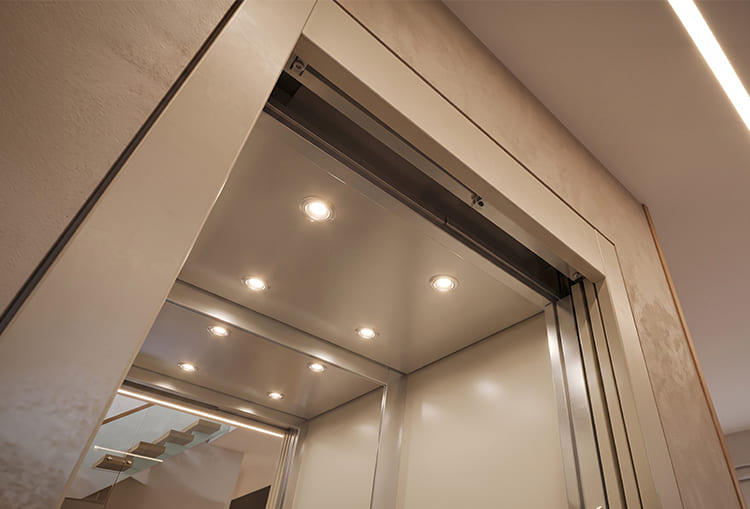
For this reason, LED lighting is best combined with an automatic switch-off system where the installation allows it.
Is automatic lighting switch-off worthwhile?
Automatic switch-off prevents the lighting from remaining on when the car is empty and the lift is stationary.
Presence or motion sensors can switch off the lighting when no use is detected.
This can be particularly useful in a home, where the lift may remain unused for long periods.
What is standby mode on a lift?
Standby mode allows certain lift components to operate in a low-energy state during periods of inactivity.
Depending on the system configuration, some components can reduce or interrupt their operation while the lift remains stationary.
The aim is to avoid unnecessary energy consumption during periods when the lift is not being used.
Does drive technology affect energy consumption?
Yes. The drive technology affects the amount of energy required to move the lift car.
In electric systems, the overall configuration determines how much work the motor has to perform during travel. Energy efficiency should therefore not be assessed solely on the basis of rated power.
Hydraulic systems work on a different principle and their energy performance needs to be assessed according to the specific characteristics of each installation.
When comparing technologies, consider the system as a whole:
- Type of drive.
- Equipment power requirements.
- Energy consumption during operation.
- Standby consumption.
- Frequency of use.
- Expected load.
- Installation conditions.
This allows you to assess energy efficiency according to how the lift will actually be used.
What does a variable frequency drive do?
A variable frequency drive controls the motor during starting and stopping.
It allows these movements to be managed progressively and forms part of the system that controls the operation of the lift.
It should be considered alongside the rest of the equipment, particularly the drive technology and expected operating conditions.
It therefore makes little sense to assess the variable frequency drive in isolation: efficiency depends on the system as a whole.
Do power and electricity consumption mean the same thing?
No. They are different concepts and it is important to distinguish between them when assessing the electricity use of a home lift.
- Power, expressed in kW, indicates the electrical capacity required for equipment to operate under specific conditions.
- Energy consumption, expressed in kWh, indicates the amount of energy used over a given period.
- Electricity cost depends on the amount of energy consumed and the conditions of your electricity tariff.
Knowing the lift’s rated power alone is therefore not enough to determine how much it will cost to run.
To find out more about the relationship between consumption and your electricity bill, read our guide to how home lift electricity consumption affects your energy bill.
Does a single-phase lift consume less than a three-phase lift?
Not necessarily. The type of electrical supply alone does not determine a lift’s energy consumption.
Efficiency depends on the equipment as a whole and on the actual conditions of use:
- Lift technology
- Technical characteristics of the equipment
- Frequency of use
- Load carried
- Consumption during operation and standby
A single-phase supply can be particularly relevant in a home because it may allow the lift to be integrated into a domestic electrical installation, provided that both the lift and the property’s electrical system meet the necessary requirements.
At SHE-Elevator, we manufacture single-phase electric home lifts designed with low energy consumption in mind.
How does maintenance affect energy consumption?
Maintenance should not be regarded as an energy-saving measure in isolation. Its role is to keep the lift operating under its intended conditions and to identify potential faults or irregularities.
During servicing, the overall operation of the lift and its relevant components is checked. Proper maintenance helps preserve these operating conditions throughout the lift’s service life.
For more information, read our guide to home lift maintenance.
What should you check before choosing a home lift?
If electricity consumption is important to you, do not compare lifts solely on the basis of motor power.
Before choosing a home lift, review the available technical information and consider the following factors together:
| Aspect | What to check |
|---|---|
| Technology | Type of drive system |
| Power supply | Type of electrical connection |
| Power | Electrical requirements of the equipment |
| Consumption | Energy used during operation and standby |
| Lighting | Lighting technology and automatic switch-off options |
| Standby | Functions available during periods of inactivity |
| Usage | Expected frequency of use |
| Load | Transport requirements within the home |
| Space | Available installation conditions |
| Maintenance | Requirements for keeping the lift in good operating condition |
This provides a more realistic energy comparison without separating consumption from the other requirements of the property. If you are still deciding which solution is right for you, read our guide on how to choose the right home lift.
Which model should you choose if space is limited?

The available space is one of the factors to consider before choosing a home lift.
Where dimensions restrict the installation, you may want to consider our SHE-001 home lift for small shafts, designed for projects where space is limited.
Before choosing a model, the available dimensions and installation requirements should always be checked.
What if you need an accessible solution?
When the lift is being installed to meet mobility needs, the choice should take into account both the characteristics of the property and its intended use.
In these cases, you may wish to consider our SHE-004 accessible home lift, designed to support accessibility and greater independence at home.
The final configuration should always be adapted to the specific conditions of the property and the needs of the people using it.
What can you do to reduce your electricity costs?
If you want to keep the electricity consumption of your home lift under control, start with these points:
- Choose a technology suited to the intended use.
- Use LED lighting in the lift car.
- Configure automatic lighting switch-off when the lift is not in use.
- Make use of available standby functions.
- Distinguish between power and energy consumption when assessing the electrical installation.
- Maintain the lift correctly to preserve its intended operating conditions.
- Consider the consumption of the whole system, not just the motor.
The aim is not to focus on a single consumption figure, but to choose and configure the lift according to the actual needs of your home.
Frequently asked questions about home lift energy consumption
How much electricity does a home lift use?
There is no single consumption figure for all home lifts. It depends on the technology, frequency of use, load, lighting, standby consumption and the specific characteristics of the equipment.
What uses the most electricity in a lift?
Electricity consumption does not come from the motor alone. Lighting and systems that remain active while the lift is stationary also contribute to overall consumption.
Does switching off the lift car light reduce consumption?
Yes. Preventing the lighting from remaining on while the lift is not in use reduces the electricity consumed by the lighting system. LED lighting and automatic switch-off can help manage this consumption.
Does standby mode reduce lift energy consumption?
Standby functions are designed to reduce the consumption of certain components during periods of inactivity. How they operate depends on the configuration of the lift.
How can I find out how much electricity my lift uses?
Check the technical specifications of the equipment and relate them to the actual conditions of use. Rated power, expressed in kW, is not the same as energy consumption, which is measured in kWh.
So, how can you reduce your home lift electricity bill?
Reducing the electricity consumption of a home lift depends on choosing the right solution and considering how it will be used. Technology, lighting and standby consumption are among the factors that can influence overall energy use.
If you would like to explore this subject further, read our guide to home lift energy consumption.
If you are considering installing a lift in your home, take a look at the models we offer.
